
Transfer Pump Running Nonstop? Why It Won’t Shut Off
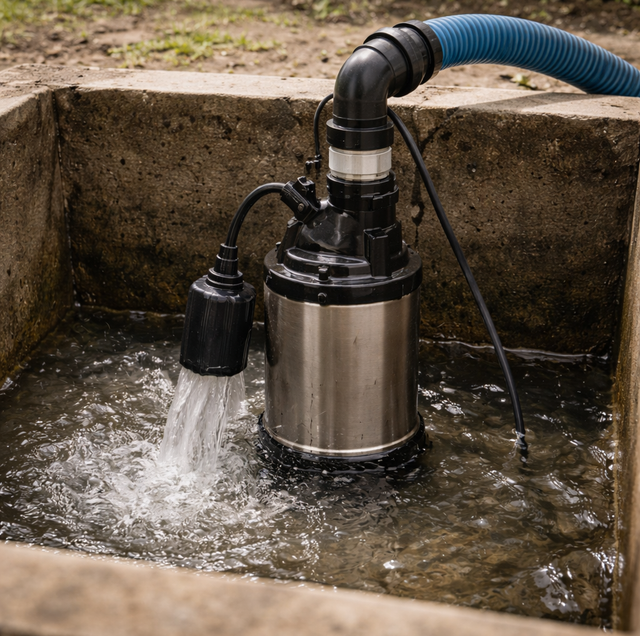
The motor housing is warm to the touch, warmer than it should be, and the pump has not gone quiet in hours. It runs, pauses for a breath, and starts up again, over and over, long after the last storm cleared and the ground outside dried out. A transfer or sump pump is built to work in bursts: fill, pump, rest, repeat. When it stops resting, one part of that cycle has broken, and every extra minute of runtime is now working against the motor rather than for you.
A pump that never shuts off is the opposite failure from a pump that never starts, and the causes are almost entirely different. Silence usually means the pump is not getting a signal to run. Constant running means it is either getting a false signal to keep going, pushing water that keeps coming back, or facing more water than it can clear. Sorting out which of those is happening is the whole job, because the fix for a stuck float is nothing like the fix for a pump that is simply too small for the water reaching it.
The Cost of a Pump That Never Rests
Before the causes, it helps to know why this is worth acting on quickly. A submersible pump motor is cooled by the water around it and by the rest periods between cycles. Run it continuously, and the windings climb toward their thermal limit, the start components stay energized, and the bearings that are meant to spin up and coast down instead grind away without a break. Hot, humid air only shortens that clock, since a motor housing sitting in warm, damp air sheds heat slower than one in a cool space.
Most of these motors carry a duty-cycle rating, a share of each hour they are designed to run. Push well past it and a thermal overload may trip to protect the windings, giving you a pump that runs hard, quits, cools, and runs again. Ignore that warning and the motor or its start capacitor is often the next thing to fail. The pump that runs nonstop today is frequently the pump that burns out next week, which is why the running is the symptom to chase, not tolerate.
When the Float Never Lets It Stop
The float switch is the part that senses the water level and tells the motor when to start and, just as important, when to stop. Most constant-running calls trace back to a float that can no longer signal "stop." It is stuck in the raised, motor-on position, so the pump keeps pumping even after the pit is empty.
A float gets stuck for a few plain reasons.
A jammed float: a tethered float rides on a cord and needs open room to swing down as the water drops; in a narrow pit, or after the pump shifts on its base, it can wedge against the wall, the discharge pipe, or its own cord and hang in the on position.
A fouled guide: a vertical float rides a rod, and silt, iron sludge, or scale on that rod can leave the collar stuck up high.
A float mounted wrong: if the tether is clamped too long or the switch sits too low, the pump satisfies the low level late or never, so it runs on. A waterlogged float that has cracked and taken on water is the reverse problem, since it sinks and fails to start, but the same debris and mounting issues that sink one float will jam another open.
The action here is direct. With the power off, clear anything crowding the float, wipe sludge off the rod or hinge, and make sure a tethered float has a clear arc to fall through. If the switch itself feels gritty or does not click as you move it by hand, it has likely worn out and needs replacing rather than cleaning.
A Check Valve That Lets the Water Come Back
The check valve sits on the discharge pipe and is supposed to be a one-way door: water goes up and out, and none drains back into the pit. When the valve's flapper or spring wears out or fouls with grit, that door no longer seals. Every time the pump shuts off, the column of water standing in the discharge pipe falls straight back down into the pit.
The result is a pump chasing its own tail. It empties the pit, shuts off, and within seconds the backflow refills it enough to trip the float and start the cycle again. You get short, endless runs that never seem to gain ground, and the pit level barely changes between them. It is a quiet failure, because nothing looks broken; the pump works perfectly, it is just moving the same water in a loop. A telltale sign is a distinct gurgle or a "thunk" a moment after the motor stops, the sound of that water column dropping back through the failed valve.
Replacing a worn check valve, or adding one if the line never had a working valve, breaks the loop. On a taller discharge run, there is more standing water to fall back, so a failed valve on a high lift wastes more runtime than the same failure on a short one.
When the Pump Simply Cannot Keep Up
Sometimes the pump is healthy, and the float is fine, and it runs constantly because water keeps arriving as fast as it leaves. This is a capacity problem, not a fault. The pump may be undersized for the inflow, moving fewer gallons per minute than the pit collects, or the water table may sit high enough that groundwater seeps in continuously through the pit walls and floor. A long soaking rain can raise the surrounding ground so much that steady seepage runs for a day or more after the sky clears, though the same nonstop running can appear in the dry season when a high water table alone keeps the pit fed.
Reading this one is a matter of watching. If the pump clearly lowers the water each cycle and the pit refills slowly from real inflow rather than backflow, you are looking at supply, not a broken part. The answer may be a higher-capacity pump matched to the measured inflow, but bigger is not automatically better: a pump that far outpaces a small pit empties it in seconds and short-cycles instead. Persistent seepage sometimes points past the pump entirely, to drainage or a water-table issue a technician can help you weigh.
A Pressure Switch Stuck in the On Position
Not every transfer pump runs on a float. A pressure-type transfer or booster pump uses a pressure switch that starts the motor when line pressure drops and stops it when pressure builds back to the cut-out point. When that switch sticks closed, or its contacts weld together from years of arcing, it never sends the "stop" command, so the pump runs regardless of pressure.
The clues differ from a float failure. Here the pump often runs without the pit or line ever calling for it, and on a system with a pressure tank you may see the gauge climb high and stall while the pump keeps pushing. A waterlogged pressure tank can drive the same symptom from the other direction, cycling the switch so fast it feels like continuous running. Because a stuck pressure switch involves live electrical contacts and system pressure, this is the point where testing is best left to a technician with a meter rather than guessed at by hand.
A Leak in the Discharge Line
A leak anywhere between the pump and where the water is supposed to end up can also keep a pump running. If a cracked fitting, a loose union, or a split in the discharge pipe lets pumped water escape and find its way back to the pit, the pump keeps refilling and re-pumping the same leaked water. It behaves much like a failed check valve, an endless loop, except the leak point may be visible: a wet spot, mineral crust, or dripping at a joint along the run.
How a Technician Finds the Real Cause
The reason a pro can separate these quickly is that each cause leaves a different fingerprint, and the tool is patience: watch one full cycle from start to stop. A technician lets the pump run, watches the water level, and times what happens. Does the level drop and then refill instantly with a gurgle at shutoff? That is backflow through a check valve. Does the level drop and refill slowly from the walls? That is inflow the pump cannot outrun. Does the pump run but the level never move? That points to a worn impeller or airlock.
From there the checks get specific. The float is tested by hand for full travel, lifted and lowered to confirm it both starts and stops the motor and swings without catching. The check valve is inspected for a flapper that seats, the discharge run gets a look for leaks, and on a pressure system the switch and tank pressures get metered. Working a full cycle in order is what keeps a good pump from being replaced over a five-dollar valve, and catches a failing motor before it runs itself to death.
What Constant Running Really Signals
A pump that will not shut off is telling you one of three stories: it never gets the signal to stop, it keeps re-pumping water that comes back, or it is outmatched by the water arriving. A healthy pump in a healthy pit rests between cycles, so continuous running is always a symptom, never the baseline. The single most useful habit is to note what the pit does the moment the motor stops, since that one observation usually names the cause before the motor pays for the delay. If the pattern outlasts the weather and you cannot pin it to a float or a valve, that is the point to bring in a meter rather than keep letting the motor run.
Frequently Asked Questions
Yes, briefly. During a heavy soaking rain, right after wet-season groundwater recharge, or while nearby construction is dewatering the area, real inflow can keep a correctly sized pump cycling frequently for a day or two. The test is whether it settles down once conditions do. Running that continues for days with no rain, or that never lowers the pit, is a fault to chase, not weather. A brand-new drainage system that has not finished settling can also seep more at first and calm down over its first season.
Yes, and the tether length does more than set the off point. The free cord between the float and its tie-off sets the pump-down range: a longer tether means the water swings through a bigger gap before the pump stops, so the pit fills and drains further each cycle and the pump runs long, while a very short cord narrows that gap into rapid short-cycling. Most tethered switches want a few inches of free cord and a clamp point that lets the float fall clear of the discharge pipe and the pit wall. If the float is sound but the clamp was set long during install, the pump will run past every sensible off level. Re-clamping to the maker's recommended range fixes it with no new parts.
The pump has stopped moving water even though the motor still spins, and the useful skill is telling an airlock from a worn impeller, because the fixes differ. An airlock is trapped air the pump cannot burp out, usually because the tiny weep hole between the impeller and the check valve has clogged; clear that hole with a pin, refill the housing, and the pump often grabs water again at once. A worn impeller gives no such quick win: the vanes are sanded down and cannot build lift no matter how you prime it. A fast field test is to break the air pocket, lowering the running pump an inch or tipping it slightly; if flow suddenly starts, it was an airlock, and if it stays dead, suspect the impeller or a plugged intake screen. Cut power before pulling it to look.
Isolate the valve instead of only timing the cycle. With the power off, a clear-bodied check valve lets you watch the flapper directly: shine a light and see whether it drops fully shut or hangs part-open on a bit of grit. On an opaque valve, mark the water line, cut power, and watch the pit; if the level climbs on its own with the motor dead, water is draining back through the valve, since an undersized-but-healthy pump cannot refill anything once it is off. Valve type also steers the fix. A swing check leans on a hinged flap and a soft seat that grit props open easily, while a spring-loaded check snaps shut faster and holds better against backflow on a tall discharge run, which is usually the better replacement where a swing check keeps fouling.
It can. Nonstop cycling wears the float switch and its contacts faster, ages a GFCI outlet or breaker carrying the load, and on a pressure-type system it can leave a pressure tank waterlogged from never getting a rest. If the pump draws from a well or holding tank, running it dry once the source runs low adds heat damage as well. The motor is the most expensive casualty, but rarely the only one.
Match it to a measured number, not a hunch. You can gauge the real inflow by pumping the pit down, cutting power, and timing how fast it refills a known volume, which converts to the gallons per minute the replacement has to beat. Two things people miss: a pump's headline flow rating is its output at zero lift, and it drops off sharply as discharge height and pipe length grow, so read the pump's flow at your actual total head, not the big number on the box. And oversizing into a small pit just trades nonstop running for short-cycling. Where inflow really is high, a second pump or a larger pit often beats one oversized unit.
Book a diagnostic visit - a technician watches a full pump cycle, checks the float travel, and inspects the check valve to find why yours won't shut off. Pump Repair Services serves Apopka and the surrounding Central Florida area. Call (407) 625-5499.
